Cleaner Yards, Healthier Habits & Why Your Lawn Doesn't Need to Be Sterile☀️
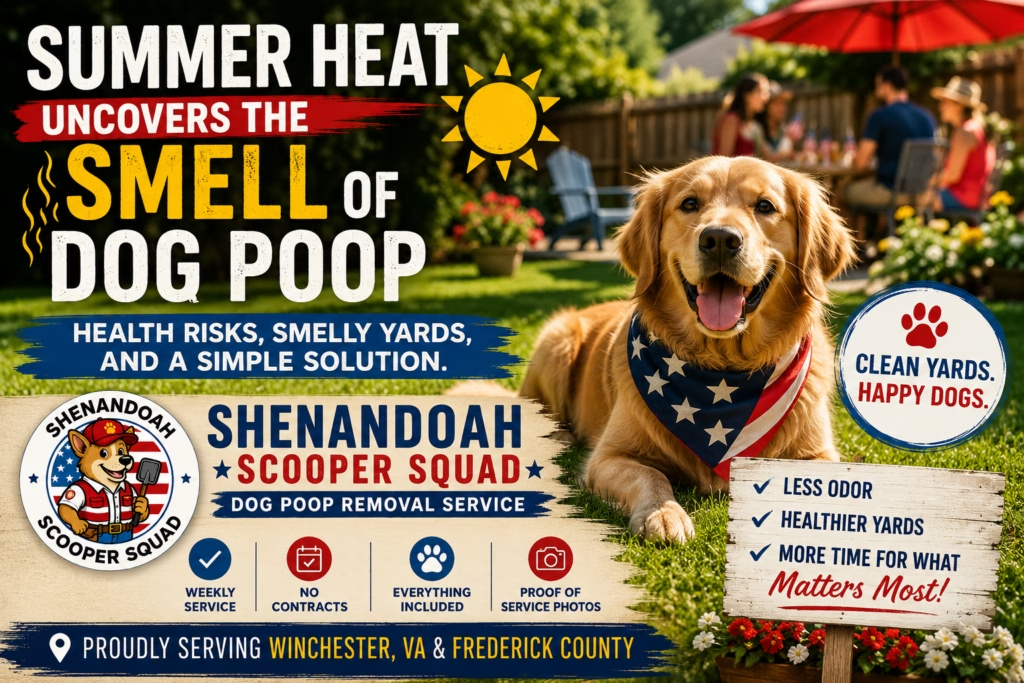
Summer is prime backyard season.
Dogs are chasing balls. Kids are running barefoot through the grass. The grill is going. Fireflies are putting on their nightly show.
And somewhere in the middle of all that summer fun… somebody’s dog just pooped. 💩
It may not be the glamorous side of dog ownership, but keeping up with pet waste is about more than having a yard that looks and smells better. Regular waste removal is also one of the simplest ways to reduce the amount of fecal contamination hanging around the places where our dogs—and our families—spend their time.
But here’s something important:
A healthy backyard doesn’t need to be a sterile backyard.
In fact, trying to “disinfect” an entire lawn isn’t practical, and applying harsh chemicals indiscriminately can create other problems for pets, plants, insects, pollinators and the little ecosystem living right outside your door.
So this month, we’re talking about a smarter approach to summer sanitation.
🦠 The Stuff You Can’t See
Dog waste isn’t just unpleasant to step in.
Depending on an animal’s health, fecal material can contain parasites, bacteria, viruses or other organisms capable of contaminating the surrounding environment.
Two names many dog owners have heard are Giardia and canine parvovirus (parvo).
Giardia is especially tricky because its environmentally resistant cysts can contribute to reinfection. The Companion Animal Parasite Council recommends promptly removing feces and notes that grass, soil and standing water can be difficult to decontaminate.
Parvo is an entirely different organism, but it’s another reminder of how persistent contamination can be. Cornell University notes that canine parvovirus is remarkably hardy, resistant to many ordinary household cleaners and capable of surviving for extended periods under the right conditions.
That’s one reason we believe something incredibly simple matters:
Pick up the poop—and pick it up consistently.
Removing fecal material doesn’t magically sterilize a yard, but it removes a major source of contamination before dogs can step in it, roll near it, investigate it or track remnants elsewhere.
Less poop sitting around = less opportunity for poop-related contamination to spread.
And that’s a Gold Paw Life principle we can get behind. 🐾
🌱 Your Lawn Isn’t a Kitchen Counter—and That’s Okay
When people hear words like parasites, bacteria and viruses, the natural reaction can be:
“What can I spray on the entire yard to kill everything?”
Usually, that’s the wrong goal.
Grass and soil are living environments. They’re home to beneficial insects, worms, microorganisms and all kinds of backyard wildlife.
That includes one of our favorite summertime visitors: fireflies. ✨
Broad pesticide or disinfectant use outdoors should never be treated casually. The EPA specifically promotes practices designed to reduce pesticide exposure to pollinators and other beneficial organisms and advises pet owners to follow product labels and keep animals away from treated areas as directed.
And when it comes to certain pathogens, soaking the lawn in disinfectant isn’t necessarily the answer anyway.
Cornell’s guidance on parvovirus specifically says you should not bleach your lawn. Outdoor factors such as sunlight, time, rainfall and dilution can help reduce environmental concentrations, while vaccination remains one of the most important protections against parvo.
For Giardia, CAPC similarly notes that soil, grass and standing water are difficult to decontaminate. Their recommendations emphasize regular feces removal, appropriate treatment of infected pets, bathing when indicated, cleaning appropriate surfaces and allowing cleaned areas to dry thoroughly.
So instead of trying to wage chemical warfare on your backyard, think:
Scoop. Clean. Prevent. Protect.🐾
That’s a much smarter summer strategy.
🏠 Don’t Forget the Germs That Can Come Inside
Here’s the part that’s easy to overlook.
The yard isn’t the only place to think about cleanliness when a dog has been sick.
Dogs drink from bowls. They chew toys. They sleep on beds and couches. They walk across floors. They climb into cars. And, despite our best efforts, they occasionally put their paws in places we’d really rather they didn’t. 😅
Pet supplies can become contaminated too.
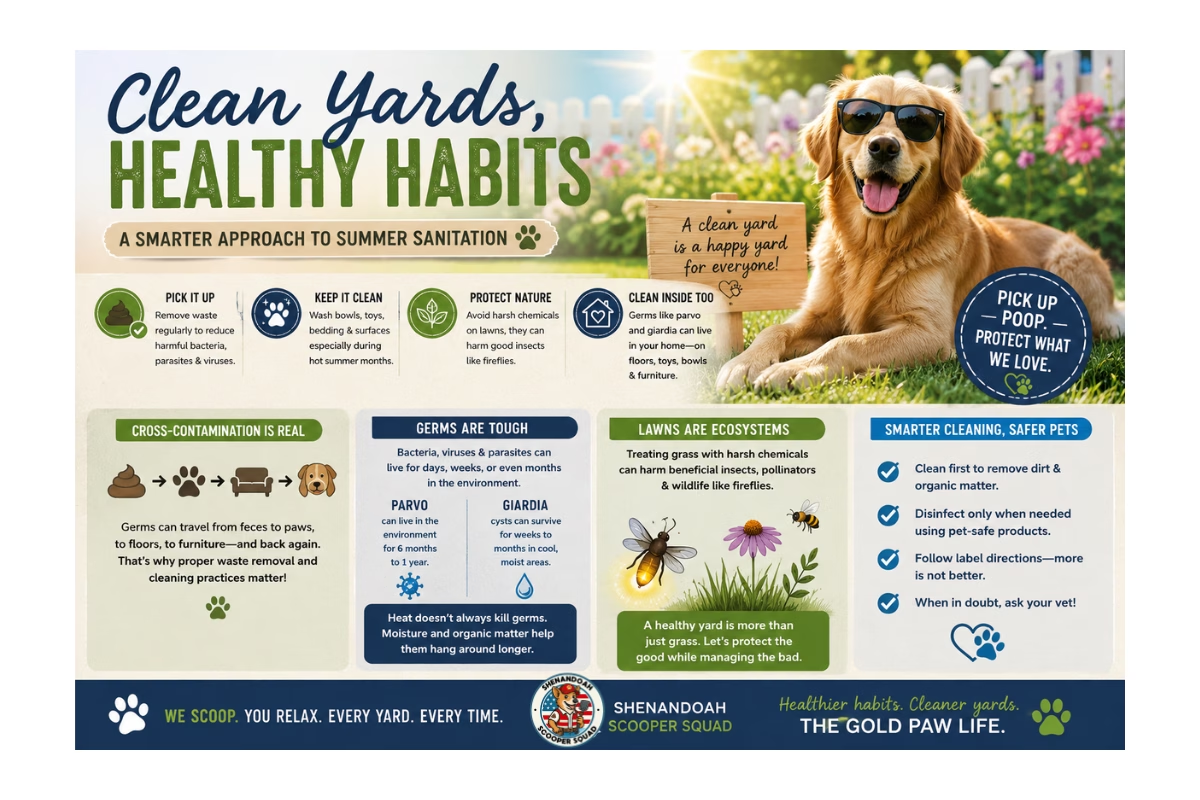
The CDC recommends routinely cleaning pet items, including food and water bowls, toys, bedding and other supplies. Cleaning physically removes dirt and germs, while disinfecting is an additional step that may be appropriate when a pet is sick or when an item has contacted urine or feces.
For everyday households, that can mean:
Water bowls: Wash them daily.
Food bowls: Clean after wet-food use and regularly for dry food.
Hard toys: Wash away dirt and organic material; disinfect when appropriate using a pet-safe method and according to product directions.
Beds and blankets: Launder regularly and more frequently following illness or contamination.
Crates and hard surfaces: Remove visible organic material first, then use an appropriate cleaning or disinfecting method when needed.
And don’t forget those sneaky spots—doggie doors, crate trays, washable furniture covers and anywhere dirty paws regularly land.
If your veterinarian has diagnosed a contagious disease or parasite, follow their specific cleaning and isolation instructions, because different organisms require different approaches.
🧽 Cleaning and Disinfecting Aren’t the Same Thing
This distinction matters.
Cleaning removes dirt, fecal material and germs from a surface.
Disinfecting uses a product or process to kill certain germs that remain.
The CDC points out that cleaning alone is sufficient for many routine pet items, while disinfection becomes particularly important when a pet is sick or an item has been contaminated with feces or urine.
And more chemical doesn’t automatically mean more protection.
A disinfectant has to be appropriate for the organism, surface and situation. It also has to be used according to its label—including proper dilution, contact time and pet-safety instructions.
For example, parvovirus is resistant to many common household cleaners. Cornell notes that properly diluted bleach can be effective on suitable indoor surfaces when used correctly and after organic material has first been removed.
That’s very different from spraying bleach all over the backyard.
Targeted sanitation beats indiscriminate sanitation.
🐕 What Cross-Contamination Actually Means
Here’s an easy example.
A dog steps near contaminated fecal material.
That paw walks across the patio.
Then the dog walks through the kitchen.
Then jumps onto the couch.
Then someone tosses the dog’s favorite ball across the floor.
Suddenly something that started in one small area has had plenty of opportunities to travel.
That’s cross-contamination.
It is also why professional pet waste removal should involve more than simply owning a rake and a bucket.
At Shenandoah Scooper Squad, we think about how equipment, footwear, tools and collected waste move from one property to another. Good sanitation practices are designed to reduce the chance that material from one yard gets carried into the next.
It’s also one reason on-site disposal in a customer’s designated trash bin is our preferred method whenever possible.
Transporting bags of pet waste from multiple properties inside a work vehicle creates unnecessary opportunities for leakage, odors and contamination of tools, equipment and vehicle surfaces. Keeping securely bagged waste at the property helps limit how much potentially contaminated material travels from yard to yard.
Haul-away is available when requested, but it requires additional handling and sanitation—which is part of why it is offered as an additional service.
☀️ The Gold Paw Summer Routine
You don’t need to turn your home into a veterinary hospital or your backyard into a sterile laboratory.
A few consistent habits go a long way:
🐾 Pick up dog waste frequently. Don’t let piles accumulate around the yard.
🐾 Keep fresh drinking water available and clean water bowls regularly—especially during hot weather.
🐾 Eliminate unnecessary standing water. Giardia can be associated with contaminated environments, and standing water deserves particular attention.
🐾 Wash dog bedding, bowls and toys regularly.
🐾 Clean visible messes before reaching for disinfectant. Organic material can interfere with effective sanitation.
🐾 Don’t indiscriminately treat the lawn with harsh chemicals. Your backyard is an ecosystem, not an operating room.
🐾 Keep puppies appropriately vaccinated and follow your veterinarian’s recommendations. Vaccination is especially important protection against parvovirus.
🐾 If your dog has diarrhea, Giardia, parvo or another suspected infectious illness, call your veterinarian. Ask specifically about isolation, cleaning, reinfection prevention and when it is safe to resume normal activities.
✨ Clean Doesn’t Have to Mean Sterile
That’s really the takeaway this month.
We want cleaner yards.
We want healthier dogs.
We want families enjoying their backyards without navigating a minefield of dog poop.
But we also want grass, worms, butterflies, bees—and those awesome summer fireflies blinking across the yard after sunset.
Responsible sanitation isn’t about trying to kill every microorganism outside.
It’s about removing the source of contamination, preventing unnecessary spread, cleaning the right things, using disinfectants appropriately and protecting the living backyard around us.
Sometimes the smartest solution isn’t another chemical.
Sometimes it’s simply getting the poop out of the yard.
And fortunately… we know a Squad for that. 😎🐾
Cleaner Yards. Happier Dogs. The Gold Paw Life.
Gold Paw Life is brought to you by Shenandoah Scooper Squad. This article provides general pet-care and sanitation information and is not a substitute for veterinary advice. If your dog has been diagnosed with or exposed to an infectious disease or parasite, consult your veterinarian for treatment and property-specific sanitation recommendations.